






If you’ve been working in Canada and you’re eyeing permanent residency through Express Entry, one question almost always comes first: does my work experience actually count? It sounds simple, but the rules have more nuance than most people expect. Get it right and you could be submitting a PR application within a year. Get it wrong and you risk a refused application or, worse, submitting a profile that never gets competitive enough to receive an Invitation to Apply (ITA).
This guide breaks down exactly what the Canadian government means by qualifying Canadian work experience, how it’s calculated, which occupations are eligible, and the pitfalls that trip up even well-prepared applicants. Whether you’re on a study permit, an open work permit, or a closed employer-specific permit, what you need to know is here.
Why Canadian Work Experience Matters in Express Entry
Express Entry is Canada’s flagship system for managing applications for permanent residence under three federal economic programs: the Federal Skilled Worker Program (FSW), the Federal Skilled Trades Program (FSTP), and the Canadian Experience Class (CEC). Of these three, the CEC was built specifically around Canadian work experience — it’s the pathway most temporary workers in Canada will use.
Beyond eligibility, Canadian work experience is a powerful point-earner in the Comprehensive Ranking System (CRS), the scoring grid that determines who receives an ITA in Express Entry draws. Canadian work experience can contribute up to 80 additional CRS points through the “skills transferability” factor alone, and it unlocks the CEC stream, which historically receives invitations at lower CRS scores than the FSW pool.
In short: if you have legitimate qualifying Canadian work experience, you should know about it, document it correctly, and use it to your full advantage.
Source: IRCC Express Entry eligibility criteria
The Core Requirements: What Counts as Canadian Work Experience for Express Entry
For the Canadian Experience Class specifically, Immigration, Refugees and Citizenship Canada (IRCC) sets out clear criteria. Your work experience must meet every single one of the following conditions — not just most of them.
1. It Must Be in Canada
This one seems obvious but matters more than you’d think. The work must have been performed physically within Canada. Remote work done from another country — even for a Canadian employer — does not count toward the Canadian Experience Class requirement. If you worked remotely from outside Canada during COVID-19 travel restrictions, there was a temporary provision allowing this, but that policy ended.
2. It Must Be Authorized
You must have had valid authorization to work in Canada during the entire period you’re claiming. That means a valid work permit (employer-specific or open), or authorization under another category such as post-graduation work permit (PGWP), spousal open work permit, or a work-permit-exempt category recognized by IRCC. Working without status — even briefly — can disqualify the entire period of experience.
3. It Must Be at TEER 0, 1, 2, or 3 Skill Level
Canada restructured its National Occupational Classification (NOC) system in 2022, replacing the old skill type/level system with TEER categories (Training, Education, Experience, and Responsibilities). For Express Entry and CEC purposes, your job must fall under TEER 0, 1, 2, or 3. TEER 4 and 5 jobs do not qualify, no matter how many hours you worked.
Your job title isn’t what determines your TEER level — your actual duties do. If you were hired as an “office administrator” but your day-to-day responsibilities align with a TEER 3 bookkeeper role, that’s the NOC code you should use. Misclassifying your occupation is a common error that can lead to misrepresentation concerns.
Source: NOC 2021 Version 1.0 — noc.esdc.gc.ca
4. It Must Total at Least One Year (1,560 Hours)
IRCC defines one year of full-time work experience as 1,560 hours. This can be accumulated in a few different ways:
- Full-time at one job: 30 hours per week for 52 weeks
- Multiple part-time jobs simultaneously: hours at different employers can be combined, as long as the total reaches 30+ hours per week
- Part-time stretched over a longer period: working fewer hours per week is allowed, provided the cumulative total hits 1,560 hours
You do not need the hours to be continuous. Gaps are acceptable — but the experience must have occurred within the three years before your application date.
5. It Must Have Been Paid Employment
Unpaid internships, volunteer work, and self-employment (in most circumstances) do not count toward CEC eligibility. This catches a surprising number of international students who completed unpaid co-op placements and assumed the hours would qualify.
Self-employment is a complex area: IRCC’s general position is that self-employment does not count for CEC, though it can count toward FSW in some circumstances. If you ran your own incorporated business and paid yourself a salary, speak with a Regulated Canadian Immigration Consultant (RCIC) or immigration lawyer before claiming this experience.

Table 1: Does Your Job Qualify? NOC TEER Levels at a Glance
Use this table to get a quick sense of where your occupation falls and whether it meets the CEC threshold. Always verify your specific NOC code using the official NOC search tool at noc.esdc.gc.ca.
NOC TEER | Example Occupations | Qualifies for CEC? | Notes |
TEER 0 | Senior Manager, Director of Finance | ✅ Yes | Management roles qualify |
TEER 1 | Software Developer, Nurse, Accountant | ✅ Yes | University degree typically required |
TEER 2 | Chef, Electrician, Paramedic | ✅ Yes | College diploma or apprenticeship |
TEER 3 | Bookkeeper, Dental Assistant | ✅ Yes | College diploma typical |
TEER 4 | Home Support Worker, Retail Sales Person | ❌ No | Does not meet CEC minimum |
TEER 5 | Labourer, Cleaner, Food Service Counter Attendant | ❌ No | Does not meet CEC minimum |
Source: ESDC NOC 2021 Version 1.0 — noc.esdc.gc.ca
CEC vs. Federal Skilled Worker: How Canadian Experience Changes the Equation
Many applicants qualify for more than one Express Entry stream. If you have both Canadian and foreign work experience, it’s worth understanding how each stream weighs your background differently.
Requirement | Canadian Experience Class (CEC) | Federal Skilled Worker (FSW) |
Work Location | Must be in Canada | Can be outside Canada |
Minimum Duration | 1 year (1,560 hours) | 1 year continuous |
Skill Level | TEER 0, 1, 2, or 3 | TEER 0, 1, 2, or 3 |
Authorized Status | Required during all work | Not required (foreign exp.) |
Language Test | CLB 7 (TEER 0/1), CLB 5 (TEER 2/3) | CLB 7 minimum |
CRS Advantage | High — Canadian exp. carries major bonus points | Lower — foreign exp. scores differently |
Typical CRS Range | 450–530+ (competitive) | 350–480 (varies widely) |
Note: CRS ranges are indicative based on 2024–2025 draw history. Scores fluctuate. Source: IRCC Express Entry Draw Results — canada.ca
In practice, the CEC tends to produce lower CRS cut-offs in draws, particularly in category-based draws for healthcare, STEM, trades, and other priority occupations. If you’re eligible for CEC, that’s usually the more competitive route.
How to Calculate and Document Your Hours
Calculating your hours sounds straightforward, but applicants regularly undercount or miscount. Here’s how to do it properly.
Step 1: Gather Your Records
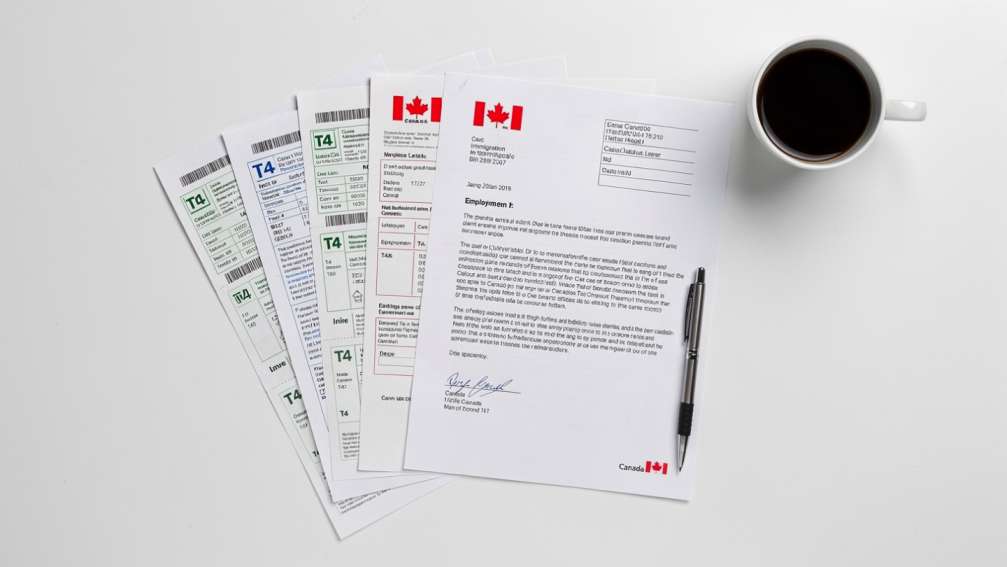
Pull together pay stubs, T4 slips, ROEs (Records of Employment), employment contracts, and any letters from employers confirming your start date, end date, job title, duties, and hours per week. IRCC may ask for any or all of these.
Step 2: Map Your Hours to a Calendar
Go week by week if necessary. Note the weeks you worked, the hours per week, and any periods where you were on leave (vacation, sick leave, parental leave). Statutory holidays where you were paid still generally count. Unpaid leaves of absence may not.
Step 3: Check the Three-Year Window
All qualifying hours must fall within the three years immediately before the date you submit your Express Entry profile — not the date you receive an ITA or submit your PR application. If your oldest qualifying hours are approaching the three-year mark, timing your profile submission matters.
Step 4: Confirm NOC Alignment
For each job you’re claiming, confirm that the NOC code you’ve selected accurately reflects the majority of your daily duties. Read the NOC unit group description carefully. If you can’t honestly say that most of your duties match, you may need to consider a different code.
Common Mistakes That Can Disqualify Your Experience
These are the errors that IRCC officers catch most often — and that RCICs flag when reviewing profiles before submission.
- Claiming experience worked without authorization: If your work permit had expired even briefly, that period is off the table. Applications have been refused for gaps as short as a few days.
- Misidentifying your NOC code: Choosing a higher-TEER code than your actual duties support is considered misrepresentation, which carries a five-year bar on re-applying.
- Including hours from unpaid co-ops or internships: These do not count, even if the work was in Canada and within your field.
- Mixing self-employment hours into CEC claims: Self-employment is generally excluded from CEC. If you freelanced on the side, keep those hours separate and get professional advice before claiming them.
- Counting remote hours worked from outside Canada: Any hours physically performed outside Canada are FSW territory, not CEC.
- Missing the three-year lookback window: Only hours within the three years before profile submission are valid. Plan your submission date accordingly.
A Real-World Example: Maria’s Path from PGWP to CEC
Maria graduated from a Canadian university in June 2023 and received a three-year Post-Graduation Work Permit (PGWP). She started working as a junior software developer (NOC 21232 — TEER 1) in October 2023 at a tech company in Waterloo, Ontario. She works 37.5 hours per week.
By October 2024 — exactly one year later — she had accumulated 1,950 hours of qualifying Canadian work experience. She took her IELTS exam and scored CLB 9 across all abilities. She created her Express Entry profile, selected CEC as her primary stream, and received an ITA in a subsequent all-program draw at a CRS score of 491.
Maria’s case illustrates the clean, textbook CEC path. Everything was authorized, the NOC match was strong, her language scores were excellent, and she submitted within the three-year window with room to spare. Not every case is this tidy — but understanding the template helps you identify where your own situation diverges and where you might need professional guidance.
If you’re unsure whether your occupation qualifies, search the NOC database directly at noc.esdc.gc.ca and read the “main duties” section for your intended code. If at least 60-70% of your daily duties match what’s described, you’re likely on solid ground.
💡 PRO TIP
What If You Don’t Have Enough Canadian Experience Yet?
Not meeting the one-year threshold doesn’t mean Express Entry is out of reach — it just means you’re likely looking at the FSW stream, which counts foreign experience, or you need to continue building your hours.
Some applicants strategically combine Canadian and foreign experience. While only Canadian experience qualifies for CEC, foreign experience at the same TEER level earns FSW eligibility and skill transferability points under both streams. A hybrid profile — one year of Canadian experience plus two or more years of foreign experience in the same field — can produce very strong CRS scores under FSW.
Provincial Nominee Programs (PNPs) are also worth exploring. Several provinces have Express Entry-aligned streams with lower CRS requirements that consider candidates with less than a year of Canadian work experience, particularly in regions with labour shortages.
Key Takeaways: Canadian Work Experience Express Entry Checklist
- Your work must have been performed physically in Canada with valid work authorization.
- The job must fall under NOC TEER 0, 1, 2, or 3 — verify your code based on actual duties, not job title.
- You need at least 1,560 hours (one year full-time equivalent) within the three years before you submit your profile.
- Paid employment only — unpaid internships, volunteer work, and self-employment generally do not count for CEC.
- Multiple part-time jobs can be combined, but each job must also be in a qualifying TEER level.
- Canadian work experience earns significant CRS points and opens the CEC stream, which typically sees lower cut-off scores.
- Document everything: pay stubs, T4s, ROEs, employment letters with job title, duties, and hours.
Conclusion
Understanding what counts as Canadian work experience for Express Entry is one of the most important things you can do before submitting a profile. The rules are precise, the stakes are high, and small errors can have outsized consequences. But the good news is that if you’ve been working legally in Canada in a skilled occupation, you’re likely further along than you think.
Use the tables and checklists in this guide as your first pass. Then verify your NOC code, count your hours carefully, and gather your documentation before you go anywhere near the IRCC portal. If your situation involves complications — self-employment, gaps in status, multiple occupations — a qualified Regulated Canadian Immigration Consultant (RCIC) or immigration lawyer is worth the investment.
Canada’s Express Entry system rewards preparation. The applicants who succeed are almost always the ones who took the time to understand the rules before submitting a profile — not after receiving a refusal.
Official Resource: IRCC Express Entry — Canadian Experience Class
LEGAL DISCLAIMER
The information provided in this article is for general informational and educational purposes only and does not constitute legal advice. Immigration laws and policies are subject to change without notice. The scenarios, examples, and interpretations presented here reflect information available as of April 2026 and may not reflect subsequent regulatory or policy changes by Immigration, Refugees and Citizenship Canada (IRCC). Every immigration situation is unique. FreshStartCanada.com strongly recommends consulting a Regulated Canadian Immigration Consultant (RCIC) authorized by the College of Immigration and Citizenship Consultants (CICC) or a qualified Canadian immigration lawyer before making any immigration decisions. FreshStartCanada.com is not responsible for outcomes arising from reliance on this content. Always verify information directly with IRCC at canada.ca.