


Making the decision to immigrate to Canada is just the first step. The real question that keeps you up at night is: where should I actually live?
I remember sitting in a cramped apartment in Toronto during my first winter in Canada, watching my bank account drain faster than I expected, wondering if I’d made the right choice. That experience taught me something invaluable—choosing the right city matters just as much as getting your visa approved.
Canada welcomed 380,000 permanent residents in 2026, and like you, each of them faced the same pivotal question: which city offers the best balance of job opportunities, affordable living, and genuine quality of life? With five Canadian cities ranking among the world’s top 100 most livable cities this year, the options can feel overwhelming.
This guide cuts through the noise. Whether you’re a tech professional eyeing Calgary’s booming startup scene, a healthcare worker drawn to Ottawa’s stability, or a family seeking the perfect balance of affordability and opportunity in Halifax, you’ll find practical insights based on real data and lived experiences.
Let’s find your future home in Canada.
Understanding What Makes a City Right for You
Before we dive into specific cities, let’s talk about what actually matters when you’re starting fresh in a new country.
The Job Market Reality Check
You can have the most beautiful apartment and the friendliest neighbors, but if you can’t find work in your field, you’ll be miserable. Canada’s national unemployment rate dropped to 6.5% in January 2026, but that number tells only part of the story.
What you really need to know:
- Industry concentration varies dramatically by city
- Toronto dominates finance and tech, but faces fierce competition
- Calgary’s energy sector is rebounding with renewed vigor
- Ottawa offers government job stability that’s hard to match elsewhere
- Vancouver’s film and tech industries create niche opportunities
The fastest way to drain your savings is landing in a city where your skills aren’t in demand. Research which industries are actually hiring in your target cities—not just which ones exist there.
Cost of Living: Beyond the Rent Number
When someone tells you Vancouver is expensive or Quebec City is cheap, what do they actually mean? Let’s break it down with numbers that matter.
The average Canadian spends about 35-50% of their income on housing and utilities. In 2026, that reality looks very different depending on where you plant your roots:
- A one-bedroom apartment in downtown Toronto costs around $2,587 per month
- The same apartment in Calgary runs about $1,927 per month
- In Quebec City, you’re looking at roughly $1,400 per month
But here’s what the rental listings don’t tell you: those cheaper cities often come with trade-offs. Lower rent might mean a smaller job market, limited public transit, or fewer cultural amenities that make you feel at home.
Quality of Life: The Intangibles That Matter
Quality of life encompasses everything that makes a place feel like home rather than just a location on a map. It’s having access to healthcare when your child gets sick. It’s being able to afford a meal at a restaurant that serves food from your home country. It’s feeling safe walking to the grocery store after dark.
According to the 2026 Quality of Life Index by Numbeo, factors like safety, healthcare access, pollution levels, and commute times significantly impact daily satisfaction. Ottawa leads Canadian cities in overall quality of life, combining high purchasing power with strong safety scores and reasonable housing compared to Vancouver or Toronto.
The Immigration Support Ecosystem
This is something newcomers often overlook until they’re already struggling. The best cities for immigrants aren’t just those with jobs and affordable housing—they’re cities that actively help you succeed.
Look for:
- Settlement services funded by IRCC (Immigration, Refugees and Citizenship Canada)
- Language training programs (free or subsidized)
- Credential recognition support for internationally trained professionals
- Newcomer employment programs that understand foreign work experience
- Active immigrant communities from your region or country
Cities like Toronto, Calgary, and Ottawa have invested heavily in these support systems. Smaller cities may offer cheaper rent but lack the infrastructure that helps you actually build a life.
The Top Cities for Immigrants in 2026
Let’s explore each city with the kind of detail that helps you make a real decision—not just read another generic list.
Toronto: The Gateway That Never Sleeps

Toronto is Canada’s undisputed immigration capital. Over 51% of residents were born outside Canada, making it one of the world’s most culturally diverse cities. Walk through neighborhoods like Little India in Gerrard, Koreatown along Bloor, or the Golden Mile in Scarborough, and you’ll understand why Toronto feels like home to so many newcomers.
The Job Market Reality: Toronto’s economy generates over $330 billion annually, driven by financial services, technology, healthcare, education, and media. The tech sector alone employs over 240,000 people, with major players like Shopify, Google, and Amazon maintaining significant operations here.
But here’s the catch: competition is fierce. The Greater Toronto Area’s unemployment rate was 7.9% in January 2026, slightly above the national average. You’re not just competing with other newcomers—you’re up against established professionals with Canadian experience and local networks.
Industries thriving in Toronto:
- Financial services and fintech
- Software development and IT
- Healthcare and pharmaceuticals
- Higher education and research
- Media, advertising, and creative industries
The Housing Challenge: Let’s be blunt—Toronto is expensive. Average rent for a one-bedroom apartment downtown is $2,587 per month. Food costs run about 15-20% higher than smaller cities. A TTC (public transit) monthly pass costs $156.
Many newcomers start in suburbs like Mississauga, Brampton, or Scarborough where rent drops to $1,800-$2,200 for a one-bedroom. You’ll sacrifice some convenience but gain breathing room in your budget.
Monthly cost breakdown for a single person:
- Rent (1-bedroom, suburbs): $2,000
- Groceries: $400-500
- Transportation: $156 (TTC pass)
- Utilities: $150
- Internet/Phone: $100
- Total: ~$2,800-3,000 (excluding entertainment)
Who should choose Toronto: You’re willing to hustle in a competitive market for access to unmatched job opportunities. You value cultural diversity and want to find your community easily. You’re comfortable with a high-energy, fast-paced lifestyle. You have either significant savings, a job offer in hand, or transferable skills in high-demand sectors.
Vancouver: Where Nature Meets Opportunity

Vancouver consistently ranks among the world’s most livable cities, and for good reason. It’s the only major Canadian city where you can ski in the morning and hit the beach in the afternoon. The mild climate (rarely dropping below freezing even in winter) makes it especially appealing for newcomers from warmer countries.
The Economic Landscape: Vancouver’s economy centers on technology, film production, tourism, trade, and natural resources. The city has emerged as a major tech hub, with over 10,000 tech companies operating in the region. The film industry—often called “Hollywood North”—generates over $3.4 billion annually and employs thousands in production, special effects, and related services.
The unemployment rate for the Vancouver Census Metropolitan Area was 5.9% in early 2026, better than the national average. However, the job market can be selective, particularly in specialized fields.
Key industries:
- Technology and software development
- Film, animation, and visual effects
- International trade and logistics
- Tourism and hospitality
- Clean technology and sustainability
The Cost Dilemma: Vancouver’s beauty comes with a price tag. It consistently ranks as Canada’s most expensive city for housing. Average rent for a one-bedroom downtown apartment is $2,830 per month. Even suburbs like Burnaby ($2,642) or Richmond ($2,769) remain pricey.
Interestingly, Vancouver rents have declined 7% year-over-year as of early 2026, offering some relief. Still, you need a solid financial foundation or a well-paying job to thrive here.
Monthly cost estimate (single person):
- Rent (1-bedroom): $2,830
- Groceries: $450
- Transportation (TransLink pass): $136.30
- Utilities: $120
- Internet/Phone: $90
- Total: ~$3,600-3,800
The trade-off perspective: Yes, Vancouver is expensive. But consider what you get: year-round outdoor activities, a thriving Asian community (making it especially welcoming for newcomers from Asia), excellent food scene, proximity to nature, and a more relaxed pace than Toronto. For many, especially those in tech or film, the lifestyle justifies the cost.
Who should choose Vancouver: You work in tech, film, or trade-related industries. You value outdoor activities and mild weather. You have connections to Asian communities. You’re prepared for high housing costs in exchange for lifestyle benefits. You don’t mind a more laid-back professional culture compared to Toronto.
Calgary: The Affordable Rising Star

Calgary is Canada’s best-kept secret for newcomers. It offers big-city amenities without the crushing costs of Toronto or Vancouver. As Canada’s fastest-growing city in 2026, Calgary combines opportunity with quality of life in a way few other Canadian cities can match.
The Economic Boom: While Calgary built its reputation on oil and gas, the city has successfully diversified. The energy sector remains strong (especially with renewable energy growth), but technology, financial services, healthcare, and logistics are expanding rapidly. Major investments like Lee Li Holdings’ $533 million facility expansion are creating thousands of jobs.
Calgary’s unemployment rate dropped to approximately 6.3% in early 2026, with particularly strong demand in:
- Engineering and energy sector roles
- Technology and software development
- Healthcare and medical professionals
- Financial services and fintech
- Construction and skilled trades
The Affordability Advantage: Here’s where Calgary shines. Average rent for a one-bedroom apartment is $1,927—nearly $700 less than Toronto and $900 less than Vancouver. But unlike cheaper cities, Calgary maintains strong job opportunities and high salaries.
Calgary has no provincial sales tax (only 5% GST), meaning your money goes further. Property taxes are competitive, and car insurance costs less than in Ontario or BC.
Monthly living costs (single person):
- Rent (1-bedroom): $1,927
- Groceries: $350-400
- Transportation (Calgary Transit): $115
- Utilities: $140
- Internet/Phone: $95
- Total: ~$2,600-2,700
Quality of Life Factors: Calgary offers 333 days of sunshine annually—more than any other major Canadian city. The Rocky Mountains sit less than an hour away, offering world-class skiing, hiking, and outdoor recreation. The city is clean, safe, and has excellent schools.
The welcoming attitude toward immigrants is genuine. Calgary has robust settlement services, active newcomer communities, and a growing multicultural scene. The Calgary Stampede, while distinctly Western, celebrates diverse cultures throughout the year.
The Climate Reality: Let’s address the elephant in the room—Calgary winters are cold. Temperatures can drop to -30°C with wind chill. However, frequent Chinook winds bring warm breaks, and the dry cold feels less harsh than Toronto’s damp cold. Plus, excellent public transit and +15 walkway systems (enclosed overhead pedestrian bridges) keep you comfortable.
Who should choose Calgary: You want affordability without sacrificing job opportunities. You work in energy, tech, engineering, or healthcare. You value outdoor activities and don’t mind winter. You’re looking for a city that’s still growing and offers opportunities to establish yourself. You want your housing dollar to stretch further while maintaining city amenities.
Ottawa: Stability Meets Bilingual Opportunity
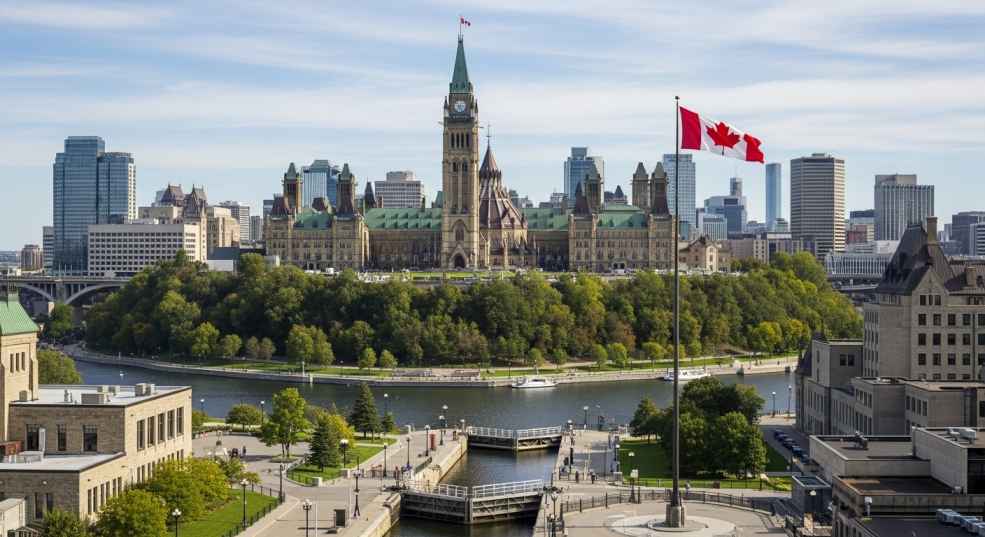
As Canada’s capital, Ottawa offers something unique—stability. While other cities ride economic waves, Ottawa’s economy remains steady thanks to government employment, which accounts for approximately 30% of jobs in the region.
The Bilingual Advantage: Ottawa straddles Ontario and Quebec, making it Canada’s most bilingual major city. While you can absolutely survive with English only, learning French opens significantly more opportunities, especially in government, education, and healthcare.
About 25% of Ottawa residents were born abroad, reflecting the city’s embrace of immigration. The federal government actively recruits international talent, and many settlement programs specifically support newcomers.
Economic Profile: Ottawa’s economy blends public sector stability with growing private sector dynamism. The city has emerged as a major tech hub—sometimes called “Silicon Valley North”—with strengths in software, telecommunications, and cybersecurity.
Key employment sectors:
- Federal government and public administration
- Technology and telecommunications (Shopify is headquartered here)
- Healthcare and medical research
- Higher education and research institutions
- Aerospace and defense
Ottawa’s unemployment rate hovers around 6-7%, with particularly strong opportunities for bilingual professionals.
Living Costs: Ottawa offers a middle ground between expensive Toronto/Vancouver and more affordable prairie cities. Average rent for a one-bedroom apartment is approximately $1,850-$2,000 in the city center, dropping to $1,500-$1,700 in suburbs like Kanata or Orleans.
Monthly budget (single person):
- Rent (1-bedroom): $1,850
- Groceries: $380
- Transportation (OC Transpo): $128.75
- Utilities: $130
- Internet/Phone: $90
- Total: ~$2,550-2,700
Quality of Life: Ottawa ranks first in Canada for overall quality of life according to Numbeo’s 2026 index. The city combines strong purchasing power, excellent safety scores, reliable healthcare, and reasonable housing compared to Toronto or Vancouver.
The city offers excellent education, numerous museums and cultural attractions (many free!), beautiful parks and waterways, and four distinct seasons (yes, winters are cold, but summers are gorgeous).
Work-Life Balance: Ottawa’s public sector culture emphasizes work-life balance more than the private sector hustle in Toronto or Vancouver. Government jobs typically offer strong benefits, job security, and reasonable hours. The tech sector maintains competitiveness while being less intense than Silicon Valley-style startups.
Who should choose Ottawa: You value job security and work-life balance. You’re willing to learn French or are already bilingual. You work (or want to work) in government, tech, or healthcare. You appreciate a cleaner, more organized city with less congestion. You want big-city amenities without maximum stress or cost.
Montreal: Culture, Affordability, and Joie de Vivre
Montreal is Canada’s soul—the city where history meets modernity, where multiple languages mix on every street corner, and where the cost of living doesn’t crush your dreams of actually enjoying life.
The Bilingual Requirement: Let’s be clear upfront—Montreal operates primarily in French. While you can survive in English-speaking neighborhoods like NDG or the Plateau, most job opportunities require French proficiency. If you’re serious about Montreal, you need to commit to learning French.
The good news? Quebec offers free French language courses for newcomers (Programme d’intégration linguistique pour les immigrants), and immersion works. Within a year of dedicated effort, most immigrants achieve functional workplace French.
Economic Opportunities: Montreal’s economy is diverse and innovative. The city leads North America in several sectors:
Major industries:
- Aerospace and aviation (Bombardier, CAE, Pratt & Whitney)
- Artificial intelligence and machine learning (world-renowned AI research)
- Video game development (Ubisoft, Warner Bros, many others)
- Film and television production
- Pharmaceuticals and life sciences
- Engineering and design
Montreal has emerged as a global AI hub, with world-class research institutions like MILA attracting top talent. The video game industry employs over 15,000 people, making it a top destination for game developers, designers, and artists.
The Affordability Sweet Spot: Montreal offers the best value proposition of any major Canadian city. You get world-class culture, diverse neighborhoods, excellent food, and vibrant nightlife at prices that won’t bankrupt you.
Average rent for a one-bedroom apartment: $1,600-$1,800 (significantly less than Toronto or Vancouver)
Monthly living costs (single person):
- Rent (1-bedroom): $1,700
- Groceries: $320
- Transportation (STM pass): $99
- Utilities: $110
- Internet/Phone: $80
- Total: ~$2,300-2,500
Notice something? You can live in Montreal for roughly $1,000-1,500 less per month than Vancouver while enjoying arguably better culture, food, and nightlife.
Cultural Richness: Montreal isn’t just affordable—it’s genuinely fun. The city hosts over 100 festivals annually, from the Jazz Festival to Just for Laughs. The food scene rivals any North American city, with authentic cuisine from around the world. European-style cafes, neighborhoods with distinct personalities, and architecture that actually has character make Montreal feel alive.
The Trade-Offs: Winters are harsh—colder than Toronto with more snow. The French requirement filters job opportunities. Quebec’s provincial politics can be complicated for newcomers. Some find Quebec bureaucracy more challenging than other provinces.
Who should choose Montreal: You’re willing to learn French or already speak it. You work in AI, gaming, aerospace, or creative industries. You value cultural experiences and quality of life over maximum earning potential. You want to live well on a middle-class income. You’re young, adaptable, and excited about immersing yourself in a different culture within Canada.
Halifax: The Atlantic Gateway
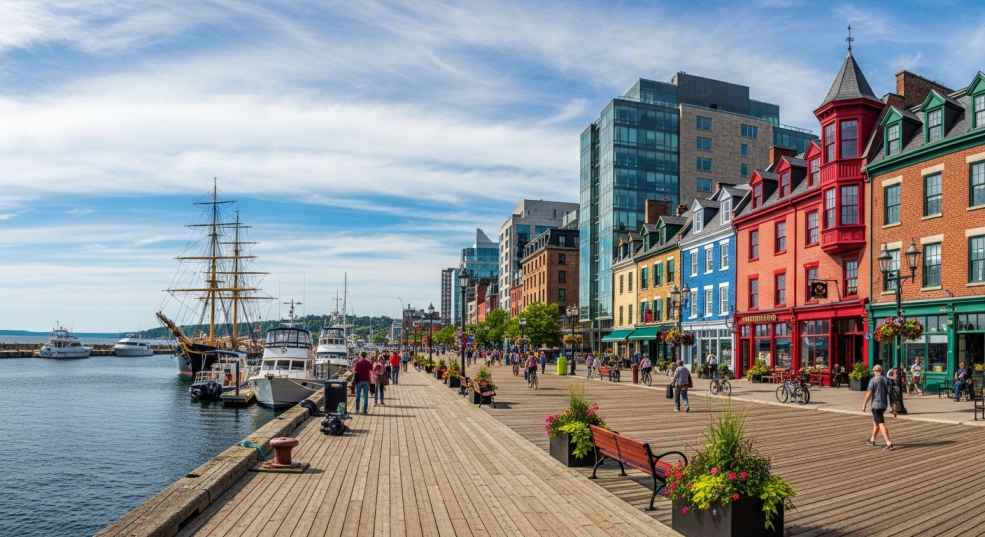
Halifax might not be on every newcomer’s radar, but it should be. As Atlantic Canada’s largest city, Halifax offers a unique combination of coastal beauty, growing job opportunities, and genuine community warmth that’s hard to find in mega-cities.
The Growing Economy: Halifax’s economy is diversifying beyond its traditional maritime and defense roots. The city is emerging as an Atlantic hub for:
- Ocean technology and marine sciences
- Information technology and cybersecurity
- Healthcare and medical research
- Financial services and insurance
- Education (home to several universities)
- Tourism and hospitality
While the job market is smaller than Toronto or Vancouver, competition is also less intense. Unemployment sits around 6-7%, and employers actively recruit newcomers to fill skill gaps.
Affordable Atlantic Living: Halifax offers significantly lower living costs than Toronto, Vancouver, or even Calgary:
Average rent for a one-bedroom: $1,600-$1,800 Property prices remain accessible for eventual home ownership Lower cost of living overall while maintaining urban amenities
Monthly budget (single person):
- Rent (1-bedroom): $1,700
- Groceries: $340
- Transportation (Halifax Transit): $82.50
- Utilities: $140
- Internet/Phone: $90
- Total: ~$2,350-2,500
Lifestyle Benefits: Halifax offers something special—it feels like a city with a small-town heart. People actually make eye contact and say hello. Commutes are short (usually under 30 minutes). The ocean is everywhere, providing beaches, hiking trails, and stunning scenery.
The food scene is excellent, with fresh seafood and diverse international cuisine. The city has festivals, theaters, and cultural events while maintaining a relaxed pace. It’s big enough to have amenities but small enough to build community quickly.
The Atlantic Immigration Program: Halifax benefits from the Atlantic Immigration Program, which offers faster immigration pathways for skilled workers, international graduates, and those with job offers from Atlantic employers. This can be a strategic advantage for newcomers still navigating the immigration process.
Climate Considerations: Halifax has milder winters than inland Canadian cities (ocean moderates temperatures) but receives significant rain and occasional snow. Summers are beautiful but shorter. The climate suits those who don’t mind maritime weather—cool, changeable, but rarely extreme.
Who should choose Halifax: You value community and slower pace over maximum career opportunities. You work in ocean tech, IT, healthcare, or education. You’re comfortable in a smaller city (around 450,000 metro population). You love being near the ocean and outdoor activities. You want affordability with city amenities. You’re interested in the Atlantic Immigration Program.
Quebec City: The Hidden Gem for French Speakers
Quebec City often gets overlooked by English-speaking immigrants, but for those willing to embrace French culture, it offers unbeatable value and quality of life.
The French Immersion Reality: Quebec City is overwhelmingly French-speaking (over 95% francophone). Unlike Montreal, where you can get by in English, Quebec City requires French for virtually all employment and daily life. This isn’t a challenge—it’s a dealbreaker unless you’re committed to learning French.
However, if you are willing to learn (or already speak French), Quebec City rewards you with:
Economic Stability: Quebec City’s economy centers on:
- Provincial government employment (as provincial capital)
- Insurance and financial services
- Technology and software
- Tourism and hospitality
- Manufacturing and aerospace
The unemployment rate is typically among Canada’s lowest, around 4-5%, with stable employment in public sector roles.
Incredible Affordability: Quebec City is Canada’s most affordable major city:
Average rent for one-bedroom: $1,200-$1,400 Food costs 15-20% lower than Toronto Low electricity costs due to hydroelectric power Property ownership remains accessible for middle-income earners
Monthly living costs (single person):
- Rent (1-bedroom): $1,300
- Groceries: $290
- Transportation (RTC pass): $95
- Utilities: $90 (electricity is cheap)
- Internet/Phone: $80
- Total: ~$1,850-2,000
You can live comfortably in Quebec City on $2,000-2,500 per month—less than rent alone in downtown Toronto.
Safety and Quality: Quebec City ranks as one of Canada’s safest cities, with extremely low crime rates. The historic Old Town is a UNESCO World Heritage site, and the city maintains European charm with modern amenities.
The pace of life is slower, community-focused, and family-friendly. It’s an excellent choice for newcomers seeking stability and affordability if French isn’t a barrier.
Who should choose Quebec City: You speak French or are committed to learning it. You value affordability above all else. You work in government, insurance, or stable industries. You prefer a slower, more traditional lifestyle. You want the lowest cost of living in a major Canadian city. Family-friendliness and safety are top priorities.
Comparison Tables: Making Your Decision
Table 1: Cost of Living Comparison (Monthly, Single Person)
| City | Rent (1BR) | Groceries | Transit | Total Monthly Cost* |
|---|---|---|---|---|
| Toronto | $2,587 | $450 | $156 | $3,500-3,700 |
| Vancouver | $2,830 | $450 | $136 | $3,600-3,800 |
| Calgary | $1,927 | $380 | $115 | $2,600-2,800 |
| Ottawa | $1,850 | $380 | $129 | $2,550-2,750 |
| Montreal | $1,700 | $320 | $99 | $2,300-2,500 |
| Halifax | $1,700 | $340 | $83 | $2,350-2,550 |
| Quebec City | $1,300 | $290 | $95 | $1,850-2,050 |
*Includes rent, food, transit, utilities ($120-140), and phone/internet ($90-100)
Table 2: Job Market Snapshot
| City | Unemployment Rate | Top Industries | Language Requirement | Competition Level |
|---|---|---|---|---|
| Toronto | 7.9% | Finance, Tech, Healthcare | English | Very High |
| Vancouver | 5.9% | Tech, Film, Trade | English | High |
| Calgary | 6.3% | Energy, Tech, Healthcare | English | Moderate |
| Ottawa | 6.0-7.0% | Government, Tech | Bilingual Advantage | Moderate |
| Montreal | ~6.5% | AI, Gaming, Aerospace | French Required | Moderate-High |
| Halifax | 6.0-7.0% | Ocean Tech, IT, Healthcare | English | Moderate |
| Quebec City | 4.0-5.0% | Government, Insurance | French Required | Low |
Making Your Final Decision: A Framework
Choosing where to settle in Canada isn’t just about finding the “best” city—it’s about finding your city. Here’s a practical framework to guide your decision:
Step 1: Assess Your Financial Reality
Be brutally honest about your financial situation:
Immediate resources:
- How many months of expenses do you have saved?
- Do you have a job offer before arriving?
- Will you receive family support during the transition?
Financial tolerance:
- Can you afford 3-6 months of job searching in an expensive city?
- Are you comfortable sharing accommodation to reduce costs?
- What’s your absolute maximum monthly housing budget?
Reality check: If you’re arriving with less than $10,000 in savings and no job offer, expensive cities like Toronto and Vancouver are risky. Calgary, Ottawa, or Halifax offer better odds of surviving the initial transition period.
Step 2: Define Your Career Path
Your industry matters more than you think:
Tech professionals: Toronto, Vancouver, Ottawa, Montreal (if you speak French), Calgary Healthcare workers: All cities have demand, but credentials recognition varies by province Engineers: Calgary, Toronto, Ottawa Finance professionals: Toronto dominates, with Montreal and Vancouver as alternatives Creative industries (film, gaming, design): Vancouver, Montreal, Toronto Trades: Calgary, construction boom provinces
Research which cities have established communities in your profession. Networking is crucial for landing your first Canadian job, and industry clusters matter.
Step 3: Consider Your Lifestyle Priorities
What matters most to you?
Climate: If you hate cold winters, Vancouver is your best bet. If you love four seasons, Ottawa, Toronto, or Montreal offer distinct seasonal beauty. Calgary has cold but sunny winters.
Outdoor activities: Vancouver and Calgary offer unmatched mountain access. Halifax provides ocean activities. Toronto is more limited despite Great Lakes proximity.
Cultural diversity: Toronto leads, followed by Vancouver. Montreal offers European culture. Smaller cities have less diversity but often tighter-knit immigrant communities.
Pace of life: Want fast-paced hustle? Toronto. Want balance? Ottawa, Calgary, Halifax. Want relaxed European vibe? Montreal, Quebec City.
Family considerations: Consider school systems, safety, childcare costs (lowest in Quebec), and space for growing families (more affordable outside Toronto/Vancouver).
Step 4: Research Immigration Pathways
Different cities offer different immigration advantages:
Express Entry: Focuses on skilled workers; competitive everywhere but easier with French (Montreal, Quebec City) Provincial Nominee Programs (PNPs): Each province has specific streams; Calgary (Alberta), Halifax (Nova Scotia), and smaller cities often have higher nomination chances Atlantic Immigration Program: Halifax and Atlantic provinces offer faster pathways Study to PR pathway: All cities have universities, but Ottawa, Montreal, and Halifax offer lower cost of education
Your immigration status and pathway might influence your city choice. Some PNP programs require you to settle in specific regions.
Step 5: Visit Before Deciding (If Possible)
If you have the opportunity, visit your top 2-3 choices before making a final commitment. Spend a few days in each city:
- Walk the neighborhoods where you’d realistically live (not just tourist areas)
- Use public transit during rush hour
- Visit grocery stores and check prices
- Talk to immigrants from your background about their experiences
- Check out settlement services and community centers
- Get a feel for the city’s energy and pace
Sometimes a city that looks perfect on paper doesn’t feel right—and vice versa.
Step 6: Plan Your Transition Strategy
Once you’ve chosen your city, create a realistic transition plan:
Before arrival:
- Connect with newcomer communities online (Facebook groups, Reddit)
- Research settlement organizations in your chosen city
- Prepare your resume for Canadian standards
- Start networking on LinkedIn with professionals in your field
- Understand credential recognition requirements for your profession
First 30 days:
- Register with settlement services immediately
- Apply for SIN, health card, and bank account
- Join professional associations in your field
- Attend networking events and settlement workshops
- Apply broadly for jobs while building Canadian experience
First 90 days:
- Consider volunteer work or survival jobs while searching in your field
- Continue building professional network
- Take any recommended language or professional upgrading courses
- Start building credit history
- Explore your neighborhood and find community
First year:
- Focus on gaining Canadian experience (even if initially underemployed)
- Build professional network consistently
- Learn local workplace culture and communication styles
- Document your achievements for future job applications
- Reevaluate your city choice based on actual experience
Special Considerations by Background
For Families with Children
Best choices: Calgary, Ottawa, Halifax, Quebec City Key factors:
- Childcare costs (Quebec has $10/day daycare)
- School quality and ESL support
- Safety and neighborhood stability
- Space affordability (larger homes/apartments)
- Recreation and parks
Avoid: Downtown Toronto or Vancouver unless you have a high dual income. The space and childcare costs are prohibitive for most newcomer families.
For Young Professionals (Under 35)
Best choices: Toronto, Vancouver, Montreal, Calgary Key factors:
- Career acceleration opportunities
- Networking and professional growth
- Social scene and dating pool
- Cultural diversity and entertainment
- Willingness to sacrifice space for opportunity
Strategy: Consider sharing accommodation to reduce costs while building your career. Your 20s and early 30s are the time to invest in career capital, even if it means temporary sacrifices.
For Retirees or Near-Retirees
Best choices: Halifax, Quebec City, Ottawa, smaller cities Key factors:
- Healthcare accessibility
- Lower cost of living
- Slower pace and community
- Safety and walkability
- Natural beauty and recreation
Avoid: Expensive cities unless you have substantial savings or pension income. Your fixed income goes much further in affordable cities with excellent quality of life.
For Entrepreneurs and Business Owners
Best choices: Toronto, Vancouver, Calgary, Montreal Key factors:
- Customer base and market size
- Business networking opportunities
- Access to services and suppliers
- Provincial business programs and support
- Immigration pathways for entrepreneurs (some PNPs)
Research: Each province has different business immigration programs and startup ecosystems. Toronto and Vancouver have the most mature startup scenes but also highest costs.
The Hidden Costs Nobody Talks About
Beyond rent and groceries, budget for these often-overlooked expenses:
Credential recognition and licensing:
- Professional assessments: $300-1,500 depending on profession
- Additional training or exams required for Canadian licensing
- Professional association memberships
Winter clothing and equipment:
- Good winter coat: $200-500
- Boots, gloves, scarves: $150-300
- First winter is expensive if you’re from a warm country
Healthcare during waiting period:
- Most provinces have 3-month waiting period for health coverage
- Private health insurance during this period: $100-200/month
- Dental and vision aren’t covered—plan $500-1,000 annually
Transportation:
- Driver’s license conversion or testing: $100-300
- Car insurance (if needed): $150-300+/month depending on province
- Winter tires (mandatory in Quebec, recommended elsewhere): $600-1,200
Job search and networking:
- Professional resume writing: $100-300
- Networking event attendance: $30-100/month
- Professional clothing for interviews: $300-500
Building credit:
- Secured credit card deposit: $500-1,000
- Higher insurance rates before Canadian credit history
Budget an extra $3,000-5,000 beyond basic living expenses for your first year to cover these hidden costs.
Common Mistakes to Avoid
Mistake 1: Choosing the Cheapest Option Without Considering Opportunity Cost
Yes, Quebec City has the lowest rent, but if your industry barely exists there and you don’t speak French, you’ll struggle to find work. The money you save on rent disappears quickly when you’re unemployed for months.
Better approach: Choose the city where you’re most likely to find employment in your field, even if it costs more initially.
Mistake 2: Underestimating the Importance of Community
Landing in a massive city like Toronto without any community connections is isolating and makes job searching harder. Immigrant communities offer practical support, emotional connections, and often job leads.
Better approach: Research which cities have established communities from your background. The support network is worth more than you think.
Mistake 3: Burning Through Savings Too Quickly
Newcomers often underestimate how long it takes to find a good job in their field. The average job search can take 3-6 months or longer for the right opportunity.
Better approach: Be prepared for survival employment while searching. Many successful immigrants worked in retail, driving Uber, or other jobs while building their Canadian experience and network.
Mistake 4: Comparing to Home Country Instead of Canadian Reality
Your home country salary or lifestyle might have been higher. That’s normal—you’re starting over. Constantly comparing creates resentment and prevents you from appreciating your progress.
Better approach: Accept that immigration involves temporary sacrifice. Focus on your long-term trajectory in Canada, not the immediate comparison.
Mistake 5: Being Too Rigid About Housing or Location
Insisting on living downtown in a one-bedroom apartment alone will drain your savings quickly in expensive cities. Being flexible about roommates, location, or apartment size gives you breathing room.
Better approach: Start affordable, even if it’s not ideal. Once you’re employed and earning Canadian income, you can upgrade gradually.
Real Talk: What Success Actually Looks Like
Let me share what realistic success looks like in the first few years:
Year 1:
- Survival job while building Canadian experience? Normal.
- Shared accommodation to save money? Smart.
- Earning 40-60% of what you earned back home? Common.
- Feeling lost and questioning your decision? Everyone does.
Year 2:
- Entry-level position in your field? Progress.
- Own apartment (maybe still shared)? Moving forward.
- Starting to earn closer to home country income? On track.
- Understanding Canadian workplace culture? Learning.
Year 3-5:
- Position comparable to what you had back home? Success.
- Considering home ownership? Possible in affordable cities.
- Earning similar or better than home country (in purchasing power)? Achievable.
- Feeling settled and integrated? Getting there.
Immigration is a marathon, not a sprint. The immigrants who thrive are those who stay flexible, keep learning, build networks consistently, and maintain perspective during tough times.
Actionable Next Steps
Ready to make your decision? Here’s your action plan:
This week:
- Review your savings and create a realistic 6-month budget
- Research job postings in your field across your top 3 cities
- Join Facebook groups and Reddit communities for each city you’re considering
- Check settlement organization websites for services offered
This month:
- Connect with newcomers from your background in target cities
- Get your credentials assessed if required for your profession
- Adapt your resume to Canadian standards
- Research neighborhoods and housing options in realistic price ranges
- Investigate provincial nominee programs you might qualify for
Before you arrive:
- Have 6 months of expenses saved minimum (more if choosing expensive city)
- Prepare both professional and survival job options
- Research health insurance for the waiting period
- Connect with settlement organizations and book appointments
- Set up banking and prepare necessary documents
First week in Canada:
- Apply for SIN, health card, start bank account
- Register with settlement services
- Set up phone and internet
- Get familiar with public transit
- Begin apartment hunting (temp accommodation first if needed)
First month:
- Apply for jobs daily (quantity matters initially)
- Attend networking events and settlement workshops
- Volunteer or take short courses to build Canadian experience
- Build credit (secured credit card)
- Explore your city and find your community
The Bottom Line: There’s No Perfect Choice
Here’s the truth that most immigration guides won’t tell you: there is no perfect city for everyone. Each Canadian city offers different trade-offs, and what works brilliantly for one person might be completely wrong for another.
Toronto gives you maximum opportunity but demands maximum resilience. Vancouver offers lifestyle and mild weather but requires deep pockets. Calgary provides affordability and growth but tests your cold tolerance. Ottawa delivers stability and balance but moves at a slower pace. Montreal rewards cultural openness with incredible value. Halifax offers community and coast but limited industry options.
The best city for you is the one where:
- You can realistically find employment in your field
- Your budget allows you to live while building your life
- The lifestyle aligns with your values and priorities
- You have (or can build) community connections
- Your immigration pathway makes sense
