


Imagine building your future in one of Canada’s most welcoming regions, where coastal charm meets economic opportunity. The Atlantic Immigration Program (AIP) in 2026 continues to be one of the most accessible pathways to Canadian permanent residence, specifically designed for skilled workers and international graduates who want to call Atlantic Canada home.
Whether you’re a healthcare professional eyeing Nova Scotia, a tech worker considering New Brunswick, or an international graduate from a Newfoundland university, this comprehensive guide will walk you through everything you need to know about the Atlantic Immigration Program 2026—from eligibility requirements and processing timelines to insider strategies that significantly boost your approval odds.
What is the Atlantic Immigration Program?
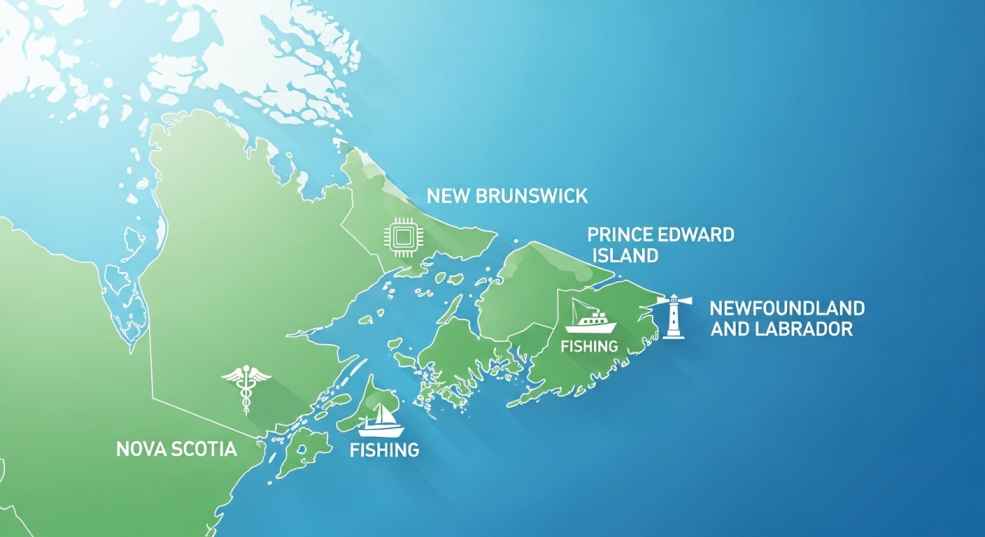
The Atlantic Immigration Program is a federal immigration pathway launched to address labor shortages in Canada’s four Atlantic provinces: Nova Scotia, New Brunswick, Prince Edward Island, and Newfoundland and Labrador. Unlike many other immigration programs that use points-based systems, the AIP emphasizes employer connections and community integration.
In 2024, the program transitioned from a pilot to a permanent pathway, solidifying its place as a cornerstone of Atlantic Canada’s economic immigration strategy. The program received over 8,500 applications in 2024, with an impressive approval rate of approximately 85%—significantly higher than many other Canadian immigration streams.
Why the Atlantic Immigration Program Stands Out
Here’s what makes the Atlantic Immigration Program 2026 particularly attractive:
Lower barriers to entry: Unlike Express Entry, you don’t need high Comprehensive Ranking System (CRS) scores. The AIP requires only one year of work experience (versus three years for Federal Skilled Worker), and language requirements are more flexible—Canadian Language Benchmark (CLB) 4 or 5 depending on your NOC category.
Employer-driven process: Having a job offer from a designated employer in Atlantic Canada forms the foundation of your application, providing built-in settlement support and employment security.
Family-friendly pathway: Your spouse or common-law partner and dependent children can accompany you, with spouses eligible for open work permits.
Community support: Each applicant receives personalized settlement services through designated settlement service provider organizations, helping with housing, school enrollment, and local integration.
Atlantic Immigration Program 2026 Eligibility Requirements
Understanding the Atlantic Immigration Program requirements is crucial for application success. The program has three distinct categories, each with specific criteria.
AIP Atlantic High-Skilled Program
This category targets workers in skilled occupations classified under National Occupational Classification (NOC) TEER 0, 1, 2, or 3.
Work Experience: Minimum 1,560 hours (equivalent to 30 hours per week for 12 months) within the last five years. This experience must be in the same NOC category as your job offer.
Job Offer: Full-time, non-seasonal position from a designated Atlantic employer. The offer must be for at least one year from the date you become a permanent resident. Your position must be classified as NOC TEER 0, 1, 2, or 3.
Education: High school diploma or higher. Foreign credentials require Educational Credential Assessment (ECA) from a designated organization.
Language: Minimum CLB 5 in English or French across all four competencies (reading, writing, speaking, listening). IELTS General Training, CELPIP-General, or TEF Canada are accepted tests.
AIP Atlantic Intermediate-Skilled Program
Designed for workers in positions requiring intermediate training, classified as NOC TEER 4.
Work Experience: Same as high-skilled—minimum 1,560 hours in the last five years in your NOC category.
Job Offer: Full-time, non-seasonal, minimum one-year position in NOC TEER 4 from a designated employer.
Education: High school diploma minimum, with ECA for foreign credentials.
Language: Minimum CLB 4 in English or French—a lower threshold than the high-skilled category, making this accessible for workers with basic language proficiency.
AIP Atlantic International Graduate Program
Tailored for recent graduates from recognized post-secondary institutions in Atlantic Canada.
Education: Degree, diploma, certificate, or trade/apprenticeship credential from a publicly-funded institution in one of the four Atlantic provinces. Your program must be at least two years long, and you must have been a full-time student for the entire duration. Graduation must have occurred within 24 months of receiving permanent residence.
Residency: You must have resided in one of the Atlantic provinces for at least 16 months in the two years before graduation.
Job Offer: Full-time position (any NOC TEER 0, 1, 2, 3, or 4) that’s non-seasonal and lasts at least one year.
Language: Minimum CLB 5 for NOC TEER 0, 1, 2, or 3 positions; CLB 4 for NOC TEER 4 positions.
Work Experience: Not required for international graduates—this is a major advantage that speeds up the pathway to permanent residence.
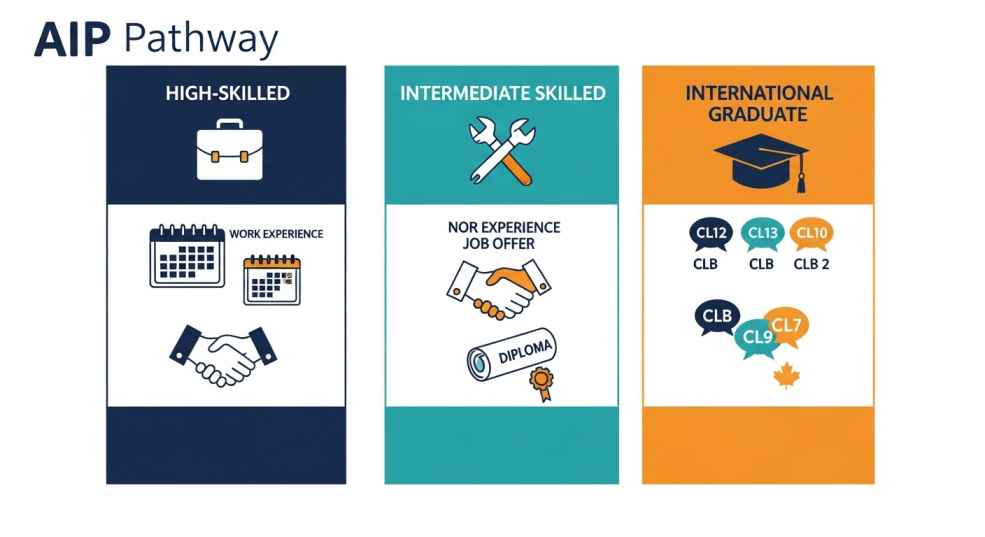
Table 1: Atlantic Immigration Program Eligibility Requirements Comparison
Requirement | High-Skilled | Intermediate-Skilled | International Graduate |
Work Experience | 1 year (1,560 hours) | 1 year (1,560 hours) | Not required |
NOC Category | TEER 0, 1, 2, 3 | TEER 4 | TEER 0, 1, 2, 3, 4 |
Language Requirement | CLB 5 | CLB 4 | CLB 4-5 (based on NOC) |
Education | High school + ECA | High school + ECA | Atlantic Canada credential (2+ years) |
Job Offer Duration | Minimum 1 year | Minimum 1 year | Minimum 1 year |
Finding a Designated Employer in Atlantic Provinces
Securing a job offer from a designated employer is the cornerstone of your Atlantic Immigration Program application. Not every employer in Atlantic Canada is designated—only those who have been approved by their provincial government can participate in the AIP.
How to Identify Designated Employers
Each Atlantic province maintains a list of designated employers, though these lists are not always publicly available. Here’s your strategic approach:
Provincial Immigration Websites: Start with official sources. Nova Scotia, New Brunswick, Prince Edward Island, and Newfoundland and Labrador each have immigration portals with information about the AIP and sometimes partial lists of participating employers.
Job Search Platforms: Use specialized immigration job boards like Job Bank Canada, ApplyBoard, and CanadaVisa. Filter searches by Atlantic provinces and look for postings that mention ‘AIP eligible’ or ‘LMIA-exempt.’
Industry Associations: Connect with sector-specific organizations. For healthcare, contact provincial health authorities. For technology, reach out to digital chambers of commerce in cities like Halifax, Fredericton, or St. John’s.
Direct Outreach: Research companies in your field operating in Atlantic Canada. If a company interests you but isn’t designated, they can apply for designation if they meet the requirements—having a concrete candidate often motivates employers to pursue this.
What Employers Must Prove for AIP Designation
Understanding what makes an employer ‘designated’ helps you target the right companies. Employers must demonstrate:
Business legitimacy: The company must be registered and actively operating in an Atlantic province for at least two years. This protects against fraudulent job offers.
Recruitment efforts: Employers must show they’ve made reasonable attempts to hire Canadian citizens or permanent residents first. This doesn’t mean extensive advertising—just documented good-faith efforts.
Good standing: No outstanding orders under provincial employment or workplace safety legislation. The business must have a clean track record regarding worker treatment.
Commitment to settlement support: Employers work with designated settlement service provider organizations to help you integrate into the community. This partnership is mandatory and beneficial for your transition.

Atlantic Immigration Program Processing Time 2026
One of the most frequent questions prospective applicants ask is: ‘How long does the Atlantic Immigration Program take?’ The answer depends on several factors, but I’ll break down realistic timelines based on 2024-2025 data and early 2026 trends.
Step-by-Step Timeline Breakdown
The AIP process involves multiple stages, each with its own processing window:
Provincial Endorsement (2-4 months): After securing your job offer, your employer submits an endorsement application to the relevant provincial government. This is where your application is first vetted. Provincial governments assess whether the job offer is genuine, whether you meet basic eligibility, and whether the settlement plan is adequate. Processing times vary by province—Nova Scotia tends to be faster (6-10 weeks), while Newfoundland and Labrador can take up to 16 weeks during peak periods.
Federal Application Submission (Immediate): Once you receive provincial endorsement, you can immediately submit your permanent residence application to Immigration, Refugees and Citizenship Canada (IRCC). This is done online through your IRCC account.
Federal Processing (6-12 months): IRCC reviews your application, conducts background checks, verifies documentation, and makes the final decision. The official processing time target is 6 months, but in practice, most applications are completed within 6-9 months. Complex cases involving extensive work history verification or additional security screening may extend to 12 months.
Total Timeline: From receiving your job offer to landing as a permanent resident, expect 8-16 months. The most efficient applications (straightforward cases, complete documentation, no complications) complete in 8-10 months. Applications requiring additional documentation or facing processing backlogs may take 14-16 months.
Table 2: Average AIP Processing Times by Province (2024-2026 Data)
Province | Endorsement Time | Federal Processing | Total Timeline |
Nova Scotia | 6-10 weeks | 6-9 months | 8-12 months |
New Brunswick | 8-12 weeks | 6-10 months | 9-13 months |
Prince Edward Island | 10-14 weeks | 7-10 months | 10-14 months |
Newfoundland & Labrador | 12-16 weeks | 6-11 months | 10-16 months |
These timelines are averages based on Government of Canada and provincial data. Individual cases may vary based on application completeness, background check complexity, and current processing volumes.
Factors That Affect Your AIP Processing Time
Several variables influence how quickly your application moves through the system:
Application completeness: Missing documents are the number one cause of delays. Every additional document request adds 4-8 weeks to your timeline. Submit everything correctly the first time.
Background check complexity: If you’ve lived in multiple countries, have an extensive work history, or come from countries requiring additional security screening, expect longer processing times. IRCC conducts thorough criminal, security, and medical checks.
Language test validity: Your language test results must be less than two years old at the time of application. Expired tests mean rewriting exams and delayed submissions.
Employer responsiveness: Sometimes IRCC contacts employers to verify job offers. Employers who respond promptly keep your application moving. Delayed employer responses can add weeks or months.
Provincial processing capacity: Application volumes fluctuate seasonally. Endorsement applications submitted in January-March typically process faster than those submitted in September-October when volumes peak.
Atlantic Immigration Program Success Rate 2026
The Atlantic Immigration Program boasts one of the highest approval rates among Canadian economic immigration programs. Understanding these statistics helps set realistic expectations and identify potential obstacles.
Overall AIP Approval Rates
Based on data from Immigration, Refugees and Citizenship Canada:
2024 Success Rate: Approximately 85% of complete applications received approval. This compares favorably to Federal Skilled Worker (72%) and Provincial Nominee Programs outside Atlantic Canada (78%).
Provincial Variations: Success rates vary slightly by province. Nova Scotia leads at 88%, followed by New Brunswick at 86%, Prince Edward Island at 84%, and Newfoundland and Labrador at 82%. These differences largely reflect processing maturity and employer familiarity with program requirements rather than fundamental program differences.
International Graduate Stream: This stream has the highest success rate at 92%, partly because applicants already have Canadian education credentials and provincial connections, reducing verification complexity.
Common Reasons for AIP Application Refusal
The 15% of applications that face refusal typically encounter these issues:
Genuine job offer concerns (35% of refusals): IRCC sometimes determines that job offers aren’t genuine. Red flags include: employers with no demonstrated business need for the position, compensation significantly below market rates, job duties that don’t align with the NOC code, or employers with a history of failing to retain foreign workers.
Insufficient work experience documentation (25% of refusals): Applicants fail to adequately prove their 1,560 hours of qualifying work experience. Common mistakes include reference letters lacking required details (job duties, hours worked, salary, supervisor contact information), gaps between claimed experience and documentation, or work experience in a different NOC category than the job offer.
Misrepresentation (20% of refusals): Providing false information or documents—even unintentionally—leads to refusal and potential five-year bans from Canadian immigration programs. This includes fake diplomas, inflated work experience, forged job offers, or omitting relevant information.
Inadmissibility issues (12% of refusals): Criminal records, security concerns, or medical conditions that pose public health or safety risks result in refusal. Even minor criminal convictions can impact eligibility, though rehabilitation is sometimes possible.
Financial insufficiency (8% of refusals): Inability to demonstrate adequate settlement funds. While the AIP requires lower financial proof than some programs, you must still show you can support yourself and your family during the initial settlement period.
Step-by-Step Application Process for Atlantic Immigration Program 2026
Success in the Atlantic Immigration Program requires careful attention to each stage of the process. Let me walk you through every step with practical insights I’ve gathered from working with successful applicants.
Step 1: Secure a Job Offer from a Designated Employer
Everything begins with your job offer. The employer must be designated to participate in the AIP (see the ‘Finding a Designated Employer’ section earlier in this article for strategies).
Your job offer must include: position title matching your NOC code, detailed job duties, start date, salary and benefits, confirmation the position is full-time and non-seasonal, and duration (minimum one year from the date you become a permanent resident).
Pro tip: Negotiate your job offer carefully. While you want competitive compensation, unusually high salaries compared to market rates can raise red flags during the assessment process. Research typical salary ranges for your position in the specific Atlantic province.
Step 2: Develop Your Settlement Plan with a Settlement Service Provider
Once you have your job offer, you’ll connect with a settlement service provider organization designated by your employer’s province. This isn’t just a formality—it’s a valuable resource.
Your settlement plan addresses: housing (identifying neighborhoods, understanding rental markets, temporary accommodation options), education for dependent children (school systems, enrollment procedures, language support programs), community connections (cultural associations, religious communities, recreation opportunities), and practical services (healthcare enrollment, banking, transportation, credential recognition for your spouse if applicable).
The settlement service provider assesses your specific needs based on your family situation, background, and destination community. They create a customized plan that you’ll reference throughout your application and upon arrival.
Step 3: Provincial Endorsement Application
Your employer submits the endorsement application to the province. You’ll provide supporting documents including:
Proof of work experience: Reference letters on company letterhead detailing job title, duties, hours worked per week, employment dates, salary, and supervisor contact information. Pay stubs and employment contracts strengthen your application.
Educational credentials: Degrees, diplomas, certificates, plus Educational Credential Assessment (ECA) from a designated organization if your credentials are from outside Canada. For international graduates, provide official transcripts showing full-time enrollment.
Language test results: IELTS, CELPIP, or TEF scores meeting your stream’s minimum requirements. Results must be less than two years old.
Settlement plan: The document created with your settlement service provider.
Valid passport and travel documents: For you and accompanying family members.
Once submitted, the province reviews your application to ensure you meet eligibility requirements and that the job offer is legitimate. If approved, you receive a Certificate of Endorsement.
Step 4: Federal Permanent Residence Application
With your Certificate of Endorsement, you’re ready to apply for permanent residence through IRCC. This is done online through your secure account.
Required documents include:
Generic Application Form for Canada (IMM 0008): Basic biographical information for you and family members.
Schedule A – Background/Declaration (IMM 5669): Detailed personal history for the past 10 years.
Additional Family Information (IMM 5406): Information about your parents, siblings, and children.
Police certificates: From every country where you’ve lived for six consecutive months or more since age 18. Obtaining these can take weeks or months, so start early.
Medical examination: Completed by a panel physician approved by IRCC. The exam must be less than 12 months old when you submit your application.
Proof of funds: Bank statements or investment documents showing you can support yourself and your family. Requirements vary based on family size.
Provincial endorsement certificate: The document you received from the province.
Photos: Recent passport-sized photos meeting IRCC specifications.
Step 5: Application Review and Decision
IRCC reviews your application, conducting background checks and verifying all documentation. You’ll see status updates in your online account:
Application received: IRCC acknowledges receipt and provides an application number.
Medical results received: Confirmation that your medical exam has been reviewed.
Background check in progress: Criminal, security, and biometric verification underway.
Final review: Your application is being assessed for approval.
During this period, IRCC may request additional documents or information. Respond promptly—delays in providing requested documents extend your overall processing time.
If approved, you’ll receive a Confirmation of Permanent Residence (COPR) and, if applicable, a permanent resident visa in your passport. If refused, you’ll receive a letter explaining the reasons, and you may have options for appeal or reapplication.
Atlantic Immigration Program Costs and Fees 2026
Understanding the complete financial picture helps you budget appropriately for your immigration journey. Here’s a comprehensive breakdown of costs:
Government Fees (Required):
– Processing fee (principal applicant): CAD $850
– Processing fee (spouse/partner): CAD $850
– Processing fee (dependent child): CAD $230 per child
– Right of Permanent Residence Fee (RPRF): CAD $515 per adult (principal applicant and spouse)
– Biometrics fee: CAD $85 per person, CAD $170 per family
For a family of four (two adults, two children), expect approximately CAD $3,350 in government fees.
Third-Party Costs (Required):
– Language testing (IELTS/CELPIP): CAD $300-$350 per test
– Educational Credential Assessment: CAD $200-$400
– Medical examination: CAD $300-$450 per adult, CAD $150-$250 per child
– Police certificates: CAD $50-$200 per country (varies significantly by jurisdiction)
– Document translation: CAD $50-$150 per document if required
Settlement Funds: While there’s no mandatory minimum for the AIP (unlike Express Entry), you should demonstrate sufficient funds to support yourself and your family during initial settlement. IRCC generally expects:
– Single applicant: CAD $13,757
– Family of two: CAD $17,127
– Family of three: CAD $21,055
– Family of four: CAD $25,564
Optional Professional Services: Immigration consultants or lawyers typically charge CAD $3,000-$7,000 for AIP representation. While not required, professional assistance can be valuable for complex cases.
Insider Tips for Atlantic Immigration Program Success
After reviewing hundreds of successful and unsuccessful applications, I’ve identified strategies that significantly improve your chances:
Start Language Testing Early
Don’t assume you’ll pass the first time, even if you’re fluent. Test format familiarity matters. Take practice tests, understand the scoring system, and leave time for retakes. Your test results must be valid (less than two years old) throughout the entire application process, not just at submission.
Build Comprehensive Work Experience Documentation
Reference letters are your strongest evidence. They should include specific job duties that clearly match your NOC code, exact employment dates and hours per week, salary information, and supervisor contact details. Supplement letters with pay stubs, tax documents, employment contracts, and performance reviews. More documentation is better than less—IRCC wants to verify authenticity.
Research Your Destination Province Thoroughly
Each Atlantic province has unique characteristics, job markets, and community resources. If you’re choosing between provinces, consider: industry strength in your field, cost of living and housing affordability, climate preferences, and cultural communities that match your background. Demonstrating genuine knowledge of and commitment to your destination province strengthens your settlement plan and overall application narrative.
Maintain Open Communication with Your Employer
Your employer is your partner in this process. Keep them informed of application progress, respond quickly to any information requests from immigration authorities, and be transparent about any changes in your circumstances. Employers who feel engaged and informed are more responsive when IRCC contacts them for verification.
Prepare for Life in Atlantic Canada Before You Arrive
Research housing markets and identify neighborhoods before arrival. Many successful immigrants secure temporary accommodation (AirBnb, short-term rentals) for their first month while house-hunting. Connect with community organizations and cultural associations online before moving. If you have children, research schools and contact them about enrollment requirements. Join local social media groups to ask questions and build connections. Understanding healthcare enrollment procedures, driver’s license requirements, and practical logistics reduces stress upon arrival.

Atlantic Immigration Program vs. Other Canadian Immigration Pathways
| Factor | AIP | Express Entry | PNP (Other) |
| Job Offer Required | Yes (designated employer) | Not always required | Varies by stream |
| Work Experience | 1 year | 1-3 years (depends on program) | 1-2 years typically |
| Language Requirement | CLB 4-5 | CLB 6-7 typically | Varies (often CLB 4-6) |
| Processing Time | 8-16 months total | 6-8 months (federal only) | 12-18 months total |
| Location Requirement | Must work in Atlantic Canada | Can work anywhere in Canada | Must initially work in nominating province |
| Points System | No points system | CRS points required (competitive) | Some streams use points |
| Settlement Support | Mandatory personalized support | Optional services available | Varies by province |
Frequently Asked Questions About Atlantic Immigration Program 2026
Can I move to a different province after getting permanent residence through AIP?
Yes, but with important considerations. Canadian permanent residents have the constitutional right to live and work anywhere in Canada. However, IRCC expects you to genuinely intend to live in the Atlantic province that endorsed you. Moving immediately after landing, especially before starting your job with the sponsoring employer, could be viewed as misrepresentation. Best practice: fulfill your employment commitment (typically one year), establish roots in the community, then decide if you want to relocate.
What happens if I lose my job before becoming a permanent resident?
Job loss during the application process is concerning but not automatically catastrophic. Contact IRCC immediately and explain the circumstances. If you can secure another job offer from a different designated Atlantic employer in the same NOC category, you may be able to continue your application with an updated endorsement. However, if you’re unable to secure new employment, your application may be refused or withdrawn.
Can my spouse work in Canada while my AIP application is processing?
Yes. Once your federal permanent residence application is submitted and you receive an Acknowledgment of Receipt (AOR), your spouse or common-law partner can apply for an open work permit. This allows them to work for any employer in Canada while waiting for your PR approval, significantly easing financial pressures during the transition period.
Do I need a Labour Market Impact Assessment (LMIA)?
No. The AIP is LMIA-exempt. Your employer does not need to prove that hiring a foreign worker won’t negatively impact Canadian workers. This significantly simplifies the process for employers, making them more willing to hire internationally.
What is the minimum salary requirement for AIP jobs?
There is no specific minimum salary mandated by the AIP. However, the job offer must meet prevailing wage rates for that occupation in the specific Atlantic province. Employers must pay market-rate compensation—significantly below-market salaries raise red flags about job offer genuineness.
Conclusion: Your Path to Atlantic Canada Starts Here
The Atlantic Immigration Program 2026 represents one of the most accessible and well-supported pathways to Canadian permanent residence. With its employer-driven approach, lower barriers to entry compared to Express Entry, and comprehensive settlement support, the AIP has helped thousands of skilled workers and international graduates build successful new lives in Canada’s Atlantic provinces.
Success in the program requires three critical elements: securing a job offer from a designated employer, meeting the specific requirements for your chosen stream (high-skilled, intermediate-skilled, or international graduate), and preparing thorough, accurate documentation throughout the process.
Remember that the Atlantic Immigration Program isn’t just about processing applications—it’s about building communities. The provinces of Nova Scotia, New Brunswick, Prince Edward Island, and Newfoundland and Labrador are investing in your success because they recognize that newcomers bring economic vitality, cultural richness, and demographic renewal to their regions.
Whether you’re a healthcare professional, skilled tradesperson, technology worker, or recent graduate from an Atlantic Canadian university, the AIP offers a realistic pathway to achieving your Canadian immigration goals. The program’s high approval rate (approximately 85%) reflects its practical design and the genuine commitment of Atlantic employers and communities to welcoming new residents.
Take the first step today: research designated employers in your field, ensure your language tests and credentials are current, and begin connecting with the Atlantic Canadian community. Your future in one of Canada’s most welcoming regions could be closer than you think.
