


You’ve invested years of your life and thousands of dollars into your Canadian education. Now comes the question that keeps every international student up at night: How do I actually turn this study permit into permanent residency?
I’ve guided hundreds of international students through this exact journey, and here’s what nobody tells you upfront: your pathway to PR doesn’t start after graduation—it starts the moment you choose your program and province. The decisions you make today will either set you up for a smooth transition to permanent residency or leave you scrambling when your work permit expires.
In 2026, the landscape for international student PR pathways has become more competitive, but also more diverse. With recent policy changes, new provincial streams, and updated Express Entry criteria, understanding your options isn’t just helpful—it’s essential. This comprehensive guide breaks down every viable route from study permit to PR Canada, with the timelines, requirements, and insider strategies that actually work.
Whether you’re still choosing your program or already working on your PGWP, you’ll discover which pathway aligns with your profile and how to maximize your chances of becoming a permanent resident.
Understanding the Foundation: From Study Permit to PGWP
Before we explore specific PR pathways, let’s establish the critical first step that connects your education to permanent residency: the Post-Graduation Work Permit (PGWP).
What Makes PGWP Your Gateway to PR
The PGWP isn’t just another work permit—it’s your bridge to Canadian permanent residency. This open work permit allows you to work for any Canadian employer in any occupation, giving you the flexibility to gain the Canadian work experience that virtually every PR pathway requires.
Here’s what determines your PGWP eligibility and duration:
Your program length directly impacts your PGWP duration. Study for eight months to two years, and you’ll receive a work permit matching your study duration. Complete a program of two years or longer, and you’re eligible for the full three-year PGWP. This three-year window is crucial—it gives you sufficient time to accumulate work experience, improve language scores, and strategically position yourself for permanent residency.
Strategic Considerations Before You Graduate
Most international students make a critical mistake: they wait until after graduation to think about PR. Smart students start planning during their first semester.
Your province of study matters more than you think. British Columbia, Ontario, and Alberta have different immigration streams with varying requirements. If you study in a province with a favorable Provincial Nominee Program (PNP), you’re already ahead of students who chose solely based on university rankings.
Your field of study creates opportunities or limitations. Healthcare, technology, skilled trades, and certain STEM fields have dedicated immigration streams. If you’re studying in these areas, you’ve already increased your PR prospects significantly.
The Main Pathways: International Student PR Routes in 2026
Let’s break down the five primary pathways from study permit to PR Canada, examining who they’re best suited for and how to qualify.
1. Canadian Experience Class (CEC) Through Express Entry
The Canadian Experience Class remains the most popular international student PR pathway, and for good reason—it’s designed specifically for people with Canadian work experience.
Who it’s for: International graduates working in skilled positions (NOC TEER 0, 1, 2, or 3) on their PGWP.
Key requirements:
- At least 12 months of full-time skilled work experience in Canada (or equivalent part-time)
- Language proficiency: CLB 7 for NOC TEER 0 or 1 positions; CLB 5 for NOC TEER 2 or 3
- Work experience must be gained within the last three years
Timeline: With Express Entry processing improvements, you’re looking at 6-8 months from submission to PR approval, provided you receive an Invitation to Apply (ITA).
The real challenge isn’t meeting minimum requirements—it’s scoring high enough in the Comprehensive Ranking System (CRS) to receive an ITA. Recent CEC draws have required scores ranging from 470 to 510 points.
Strategic advantage: As an international graduate, you can maximize your CRS score through additional education credentials, provincial nominations, arranged employment, or bilingualism. Every point matters when you’re competing against thousands of other candidates.
[TABLE 1: CRS Score Breakdown for Typical International Graduate]
| Factor | Points Available | How to Maximize |
|---|---|---|
| Age (under 30) | Up to 110 | Apply while young |
| Education (Master’s degree) | 135 | Consider additional Canadian credential |
| Language (First Official) | Up to 136 | Aim for CLB 10+ in all abilities |
| Language (Second Official) | Up to 50 | Learn French – major score boost |
| Canadian work experience (1 year) | 40 | Gain 2+ years for more points |
| Arranged employment | 50-200 | Secure LMIA-supported job offer |
| Provincial nomination | 600 | Apply through PNP (nearly guarantees ITA) |
| Sibling in Canada | 15 | Non-controllable factor |
Note: Maximum CRS score is 1,200 points. Most successful candidates score 470-510+ for CEC draws.
2. Provincial Nominee Programs (PNPs): Your Strategic Advantage
Here’s an insider secret: Provincial Nominee Programs often provide the fastest, most reliable pathway for international students. A provincial nomination adds 600 points to your Express Entry score, virtually guaranteeing an ITA.
Each province designs streams specifically for international graduates, with varying requirements and processing times.
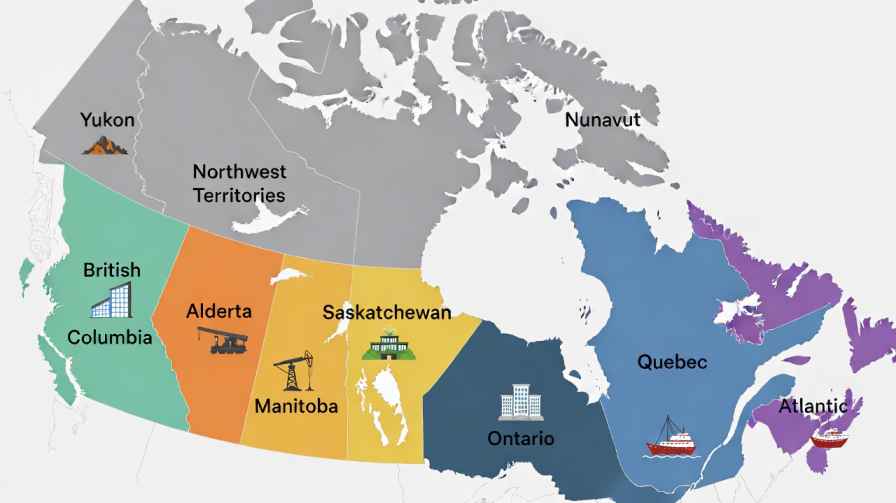
Ontario Immigrant Nominee Program (OINP): Ontario’s International Student Stream requires a job offer in a skilled occupation, but the Masters Graduate Stream needs no job offer—just a master’s degree from an eligible Ontario university. If you’re pursuing graduate studies, Ontario offers one of the most straightforward routes.
British Columbia PNP (BC PNP): BC’s International Graduate stream requires a job offer from a BC employer in a skilled occupation. The province prioritizes tech workers, healthcare professionals, and those working outside Metro Vancouver. Processing is relatively fast, typically 2-3 months for provincial nomination.
Alberta Advantage Immigration Program (AAIP): Alberta’s Graduate Entrepreneur Stream is unique—it’s designed for international graduates who want to start a business. If entrepreneurship is your path, this could be your ticket to PR while building your own venture.
Atlantic Immigration Program (AIP): The four Atlantic provinces (Nova Scotia, New Brunswick, Prince Edward Island, Newfoundland and Labrador) offer expedited pathways for international graduates with job offers from designated employers. Smaller cities, lower cost of living, and faster processing make this an attractive option if you’re open to location flexibility.
Strategic consideration: Don’t limit yourself to where you studied. If you’ve gained work experience in one province but another province’s PNP better suits your profile, you can apply there. Mobility is your advantage.
3. Quebec’s Distinct Pathway: Programme de l’expérience québécoise (PEQ)
Quebec operates independently from federal immigration programs, offering its own pathway for international students.
Who it’s for: Graduates from Quebec institutions with French language proficiency.
Key advantage: The PEQ pathway can be faster than federal routes, and Quebec actively recruits French-speaking international graduates.
Requirements:
- Diploma from a Quebec institution
- French proficiency (varies by program type)
- Minimum work experience in Quebec (requirements updated in recent years)
Important note: Quebec immigration operates under different rules. If you study in Quebec but don’t speak French proficiently, you’ll need to pursue federal pathways instead, which means potentially relocating to another province for work experience.
4. The Trade and Healthcare Fast Track
Certain occupations have dedicated pathways that bypass traditional point systems.
Healthcare workers: Nurses, personal support workers, and certain medical professionals have access to expedited streams in multiple provinces. The demand is real, and provinces are actively creating pathways for healthcare graduates.
Skilled trades: Electricians, welders, plumbers, and other Red Seal trades professionals find faster PR processing through specific PNP streams. If you’re in a trades program with a PGWP, your pathway to PR is often more straightforward than office professionals.
Strategic insight: These pathways exist because Canada has critical labor shortages. Provinces want you to stay, work, and contribute. The application process is designed to be more accessible.
[TABLE 2: Comparison of Major PR Pathways for International Students]
| Pathway | Minimum Work Experience | Language Requirement | Processing Time | Job Offer Required | Best For |
|---|---|---|---|---|---|
| Express Entry (CEC) | 12 months skilled | CLB 7 or CLB 5 | 6-8 months | No | Competitive candidates with high CRS scores |
| Ontario Masters Graduate | 0 months | CLB 7 | 6-9 months | No | Recent Ontario master’s graduates |
| BC PNP International Graduate | Job offer needed | CLB 4-5 | 2-4 months (provincial) + 6-8 months (federal) | Yes | BC graduates with skilled employment |
| Alberta Graduate Entrepreneur | Business operation | CLB 5 | 6-12 months | No (own business) | Entrepreneurial graduates |
| Atlantic Immigration Program | Job offer needed | CLB 4-5 | 6-12 months | Yes (designated employer) | Those open to Atlantic Canada |
| PEQ (Quebec) | Varies by stream | French required | 6-12 months | Depends on stream | French-speaking Quebec graduates |
5. The Rural and Northern Immigration Pilot (RNIP)
This overlooked pathway offers one of the most accessible routes to PR for international students willing to relocate.
Eleven participating communities across Canada offer immigration pathways with lower requirements than major urban centers. You’ll need a genuine job offer from an employer in the community, but CRS scores and competitive draws aren’t factors.
Who should consider this: If you’re struggling with CRS scores, open to smaller communities, and want more certainty in your PR journey, RNIP communities provide a real alternative to the uncertainty of Express Entry draws.

Maximizing Your Success: Strategic Timeline and Action Steps
Understanding pathways is one thing. Successfully navigating them requires strategic timing and preparation.
Your 12-Month Action Plan on PGWP
Months 1-3: Foundation Building
- Secure skilled employment that qualifies for your target pathway
- Register for language testing (IELTS or CIELTS) and aim higher than minimum requirements
- Begin documenting your work experience with detailed job descriptions and responsibilities
- Research which PR pathway aligns best with your profile and career goals
Months 4-6: Score Optimization
- Complete language tests and retake if scores aren’t competitive
- Get Educational Credential Assessment (ECA) completed for your degrees
- If pursuing Express Entry, create your profile and monitor CRS cut-off scores
- If targeting PNP, start researching specific provincial requirements and begin application preparation
Months 7-9: Application Preparation
- Gather all required documents: reference letters, pay stubs, tax documents
- Ensure continuous employment in skilled position
- If applicable, secure provincial nomination or enhanced job offer
- Complete background checks and medical examinations if pathway is certain
Months 10-12: Submission and Follow-up
- Submit complete application with all supporting documents
- Respond promptly to any requests for additional information
- Maintain valid status throughout processing
- Continue employment and keep documentation current
Critical reminder: Your PGWP has an expiration date. Starting your PR process early gives you buffer time if complications arise. Too many international students wait until their final PGWP year, creating unnecessary stress and pressure.
Common Pitfalls and How to Avoid Them
Through years of working with international students, I’ve seen the same mistakes derail PR applications. Here’s how to avoid them.
Pitfall #1: Working in Non-Qualifying Occupations
Your barista job might pay the bills, but it won’t qualify you for most PR pathways. Ensure your employment matches NOC TEER 0, 1, 2, or 3 categories. Job titles don’t matter—duties and responsibilities do.
Solution: Get a detailed job offer letter and ensure your daily responsibilities align with NOC descriptions for skilled positions.
Pitfall #2: Insufficient Language Scores
Meeting the minimum isn’t enough when you’re competing in Express Entry. A CLB 9 or 10 dramatically increases your CRS score compared to the minimum CLB 7.
Solution: Invest in language preparation. Take practice tests. Consider professional tutoring. The difference between CLB 7 and CLB 9 can add 20-30+ points to your score—often the difference between receiving or missing an ITA.
Pitfall #3: Incomplete Work Experience Documentation
You need detailed reference letters on company letterhead, describing your duties, hours worked, and salary. A simple employment letter won’t suffice.
Solution: Request comprehensive reference letters before leaving any position. If a company won’t provide detailed letters, supplement with pay stubs, contracts, and tax documents.
Pitfall #4: Ignoring Provincial Options
Many students fixate on Express Entry while ignoring provincial pathways that might offer faster, more certain routes.
Solution: Evaluate all options simultaneously. Apply through multiple pathways if eligible. Your first ITA or nomination is what matters.
Emerging Trends and 2026 Updates
The immigration landscape continuously evolves. Here’s what’s shaping the international student PR pathway in 2026.
Express Entry Category-Based Selection
Canada has introduced category-based draws targeting specific occupations and attributes. If you work in healthcare, STEM, trades, transport, or agriculture—or if you have strong French language skills—you may be invited with lower CRS scores than general draws.
Strategic implication: Your occupation choice matters more than ever. Aligning your career with in-demand categories provides a competitive advantage.
Increased Provincial Allocations
Several provinces have received higher nomination allocations for 2026, meaning more spaces available through PNPs. Ontario, British Columbia, and Alberta have all expanded their international graduate streams.
Strategic implication: Provincial pathways are becoming increasingly viable alternatives to direct Express Entry applications.
Tightening Study Permit Regulations
While this article focuses on those already holding study permits, it’s worth noting that Canada has implemented stricter study permit requirements. This creates less competition in the PGWP to PR pipeline for those already in the country—a silver lining for current international students.
The Financial Reality: Budgeting for Your PR Application
Let’s talk about the costs nobody mentions in university brochures.
Direct application fees:
- Express Entry federal application: $1,365 per adult (including right of PR fee)
- Provincial nomination fees: $0-$1,500 depending on province
- Language testing: $300-$400 per attempt
- Educational Credential Assessment: $200-$300
- Medical examination: $200-$450
- Police certificates: $100-$200
Indirect costs:
- Immigration consultant or lawyer (optional): $2,000-$5,000+
- Document translation and notarization: $200-$500
- Travel for medical exams or interviews: Varies
Total realistic budget: $3,000-$8,000+ for the complete process, depending on your pathway and whether you use professional assistance.
Financial planning tip: Start saving during your studies. Many students are caught off-guard by application costs when their PGWP begins and they’re still establishing themselves financially.
Real Success Stories: Pathways That Worked
Sarah – Ontario Masters Graduate Stream: Sarah completed her Master’s in Computer Science at University of Toronto. She applied through Ontario’s Masters Graduate Stream immediately after graduation—no job offer required. Within eight months, she received her provincial nomination and subsequent PR approval. Her strategic decision to pursue a master’s degree in Ontario created the most direct pathway possible.
Raj – BC PNP to Express Entry: Raj graduated with a diploma in Business Administration and secured a position as a marketing coordinator in Vancouver. He applied through BC PNP’s International Graduate stream. After receiving provincial nomination (600 CRS points), he received an ITA in the next Express Entry draw. Total time from PGWP to PR: 14 months.
Marie – Atlantic Immigration Program: Marie studied nursing in Ontario but struggled with competitive Express Entry scores. She researched Atlantic provinces and secured a designated employer position in Halifax, Nova Scotia. Through the Atlantic Immigration Program, she received PR without needing high language scores or multiple years of experience. She now works as a registered nurse in a community that desperately needed her skills.
These aren’t exceptional cases—they’re strategic applications of understanding the system and choosing the right pathway.

Your Next Steps: Taking Action Today
Knowledge without action won’t get you permanent residency. Here’s what to do right now, regardless of where you are in your journey.
If you’re still studying:
- Research provincial immigration programs where you’re studying
- Join student immigration information sessions
- Connect with international student advisors
- Consider how your program and province align with PR pathways
- Build language skills beyond classroom requirements
If you’re on PGWP:
- Create your Express Entry profile immediately to understand your CRS score
- Secure employment in skilled occupations (NOC TEER 0, 1, 2, or 3)
- Register for language testing if you haven’t recently tested
- Order your Educational Credential Assessment
- Research provincial programs you qualify for
- Document your work experience meticulously
If you’re within 6-12 months of PGWP expiration:
- Apply immediately through your strongest pathway
- Consider bridging work permits if PR processing extends beyond PGWP
- Ensure all documents are complete and accurate
- Consider professional consultation for complex situations
- Have backup plans if your first application faces delays
Frequently Asked Questions
Can I apply for PR while still on my study permit? No, you cannot apply through CEC or most international graduate streams while on a study permit. You need Canadian work experience gained on a PGWP or other valid work permit.
What if my PGWP expires before I get PR? You may be eligible for a bridging open work permit if you’ve applied for PR and your application is still processing. This maintains your legal status and work authorization while waiting for a decision.
Do I need to stay in the same province where I studied? Not for federal programs like Express Entry CEC. However, if you’re using a Provincial Nominee Program, you must demonstrate intention to live in that province.
Can I switch jobs while my PR application is processing? Yes, you can change employers while your application is processing, but ensure your new position still qualifies as skilled employment if it’s relevant to your application.
Is French language proficiency really that valuable? Absolutely. Additional official language points (up to 50 points) and eligibility for French-language category draws make bilingualism one of the most powerful advantages in Express Entry.
Conclusion: Your Pathway Starts With Strategic Decisions
The journey from study permit to PR Canada isn’t a single path—it’s a network of routes, each with distinct requirements, timelines, and advantages. Your optimal pathway depends on your education, work experience, language abilities, occupation, and location flexibility.
The international students who successfully transition to permanent residency share common characteristics: they start planning early, they understand multiple pathways, they build qualifying work experience strategically, and they maintain meticulous documentation throughout their journey.
Remember these key principles:
Start early. Your PR journey begins when you choose your program and province, not when you graduate.
Build qualifying experience. Ensure your PGWP employment counts toward your chosen pathway.
Maximize your competitiveness. Meet minimums, but aim higher—especially for language scores and work experience duration.
Consider multiple pathways. Don’t fixate on one route while ignoring alternatives that might be faster or more certain.
Document everything. Comprehensive records of employment, education, and language ability prevent delays and complications.
Your Canadian education has already demonstrated your commitment to building a future in Canada. Now it’s time to convert that investment into permanent residency and, ultimately, citizenship.
The pathway exists. The opportunities are real. Success comes to those who understand the system and navigate it strategically.
Your journey from international student to permanent resident—and eventually Canadian citizen—is not just possible. With the right knowledge and strategic planning, it’s entirely achievable.
